Soffit & Fascia
Soffit vs Fascia: What They Do and Signs of Rot in Florida
Soffit and fascia are easy to overlook until something goes wrong. Then they suddenly matter a lot, because they protect your roof edge, your attic and the gutters that hang from them. In Southwest Florida, heat, humidity and heavy rain make these parts work hard. Here is a plain-English guide to what they are, how they fail and what to watch for. A few minutes of looking up can save you a bigger repair later.
Key takeaways
- Fascia is the board along the roof edge that holds your gutters; soffit covers the underside of the overhang.
- Florida humidity, overflowing gutters and storms are the main causes of rot and damage.
- Soft wood, peeling paint, stains and sagging gutters are early warning signs.
- Always fix damaged fascia before installing new gutters.
What is fascia?
Fascia is the long, vertical board that runs along the edge of your roof, right where the roof meets the outside wall. If you have gutters, they are attached to it.
Fascia does two jobs. It gives your roofline a finished look, and it seals the ends of the rafters from rain, sun and pests.
Because gutters hang from it, fascia carries real weight, especially when gutters are full of water during a storm. That is why its condition matters so much in Southwest Florida.
Some homes have fascia wrapped in metal for extra protection, while others use painted wood. Either way, the board underneath needs to be solid.
What is soffit?
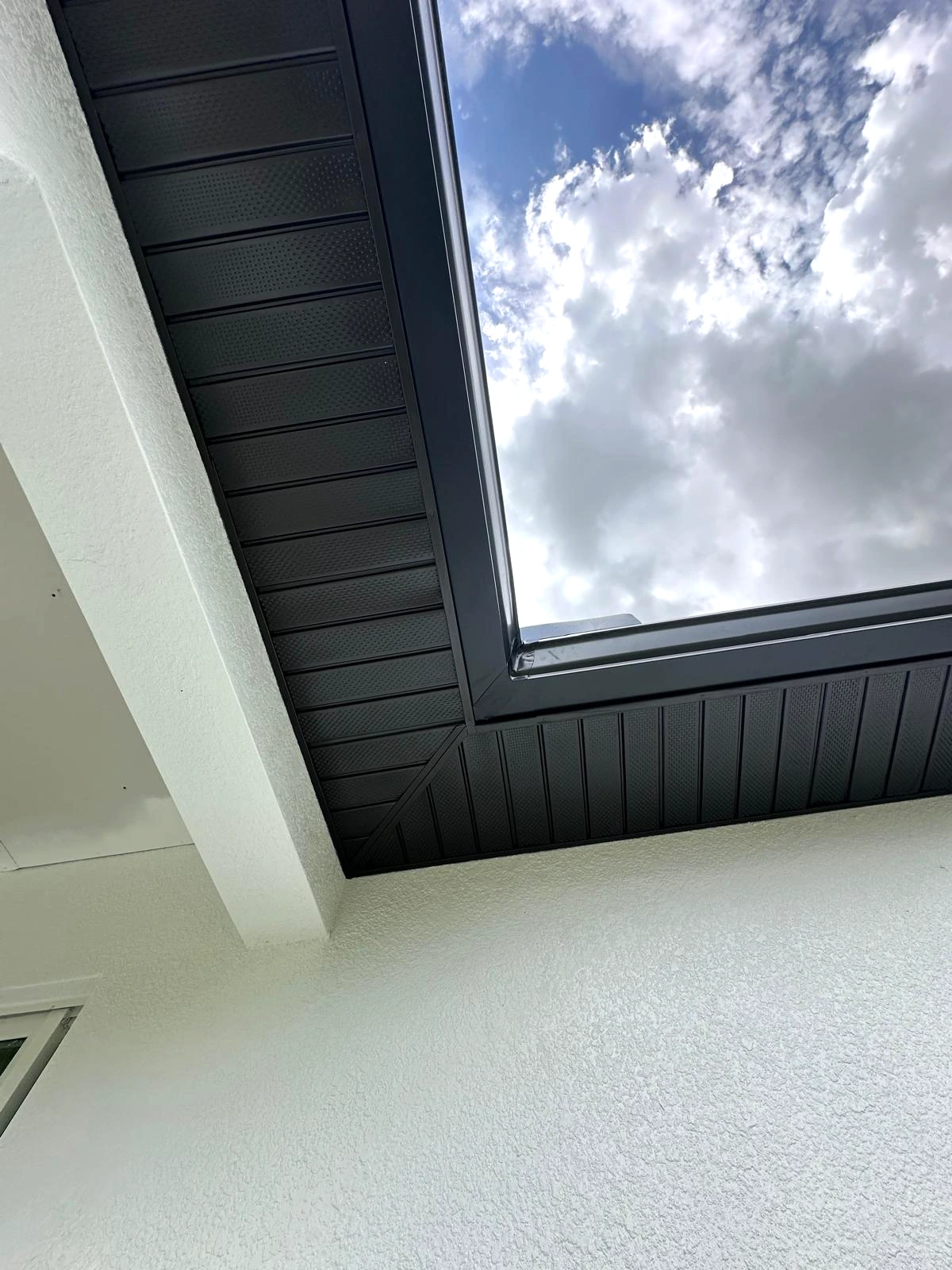
Soffit is the material on the underside of the roof overhang, the part you see when you stand under the eave and look up. Many soffit panels are vented, with small openings that let air move into the attic.
Soffit keeps birds, rodents and insects out of the attic and helps with ventilation.
How they work with your gutters and attic ventilation
The roof, fascia, soffit and gutters work as one system. The diagram below shows how they fit together.
- Gutters catch roof runoff and depend on solid fascia to stay attached.
- Fascia seals the roof edge and carries the weight of the gutters.
- Vented soffit lets air into the attic, which helps manage heat and moisture.
When one part fails, the others feel it. Overflowing gutters soak the fascia, and wet fascia can spread moisture into the soffit.
Why they fail in Florida
- Humidity keeps wood damp for long periods.
- Heavy rain and overflowing gutters soak the fascia repeatedly.
- Strong sun breaks down paint and caulk, letting water in.
- Storms can loosen or blow out soffit panels.
- Pests take advantage of any gap or soft spot.
Homes near canals and the coast, like many in Port Charlotte and Cape Coral, often see moisture-related wear sooner.
Small problems tend to grow. A tiny gap in caulk lets water in during one storm, the wood stays damp in our humidity, and soon a soft spot spreads along the board. Catching it early usually means a smaller repair.
Attic ventilation plays a part as well. If vented soffit is blocked by insulation or paint, hot and moist air can stay trapped in the attic, which can affect the roof deck and the wood at the eaves.
Warning signs of rot or damage
You can spot most problems from the ground. Look for:
- Peeling or bubbling paint on the fascia.
- Dark stains or water marks along the roof edge.
- Wood that looks swollen, cracked or crumbly.
- Gutters that sag or pull away from the house.
- Soffit panels that droop, crack or are missing.
- Wasps, birds or rodents going in and out of the eave.
- Mildew or stains on the soffit.
Homeowners in Port Charlotte and Fort Myers often call us after noticing sagging gutters, only to learn the fascia behind them has rotted.
Repair or replace?
Small areas of rot can often be cut out and replaced with new boards. If damage runs along a long stretch, or several areas have failed, replacing the full run is usually more practical.
Our fascia installation and repair and soffit installation and repair pages explain both options. For an overview of everything we do at the roof edge, see our soffit and fascia services.
We also consider what is behind the damage. If an overflowing gutter caused the rot, fixing the board without fixing the gutter means the problem will come back. The best repair addresses both.
Matching matters for appearance. Replaced sections should line up with existing boards and be painted or finished to match, so the roofline looks consistent from the street.
Wood vs aluminum and vinyl
Each material has tradeoffs. Ask during your estimate which options fit your home.
| Material | Strengths | Watch out for |
|---|---|---|
| Wood | Traditional look, can be painted any color | Needs regular painting; can rot in humidity |
| Aluminum | Does not rot, low maintenance | Can dent from impacts |
| Vinyl | Does not rot, low maintenance | Fewer color options; can crack with impact |
Fix the fascia before new gutters
This is the most important point in this article. New gutters are only as strong as the board they hang on. Mounting a new system on soft fascia means the hangers can loosen and the gutters can pull away.
That is why we inspect fascia during every seamless gutter installation estimate. Planning a full project? Our guide to seamless gutter cost factors in Cape Coral explains how fascia repairs fit into a quote.